Lichess
- 3.8
- Rating
- 1.00M
- Installs
- Free
- Price

 Analysis by App-foxy
I came to Lichess looking for a chess app that felt less like a storefront and more like a focused place to play. That impression still defines it for me. It is a free board game from lichess.org, aimed at people who want chess itself to stay at the center of the experience rather than being surrounded by purchases, promotions, or unrelated distractions.
The current Android release is version 0.21.9, and it runs on Android 8.0 or later. The app has passed one million installs, which makes it easy to see why it has become a familiar choice for chess players who want a serious mobile option without paying an entry fee. Its average rating is 3.1 from around 8.4 thousand ratings, so the public reaction is mixed rather than universally enthusiastic. That matches my own view: the chess foundation is compelling, but the mobile experience can feel less polished than the best-known commercial alternatives.
How the current Lichess experience feels
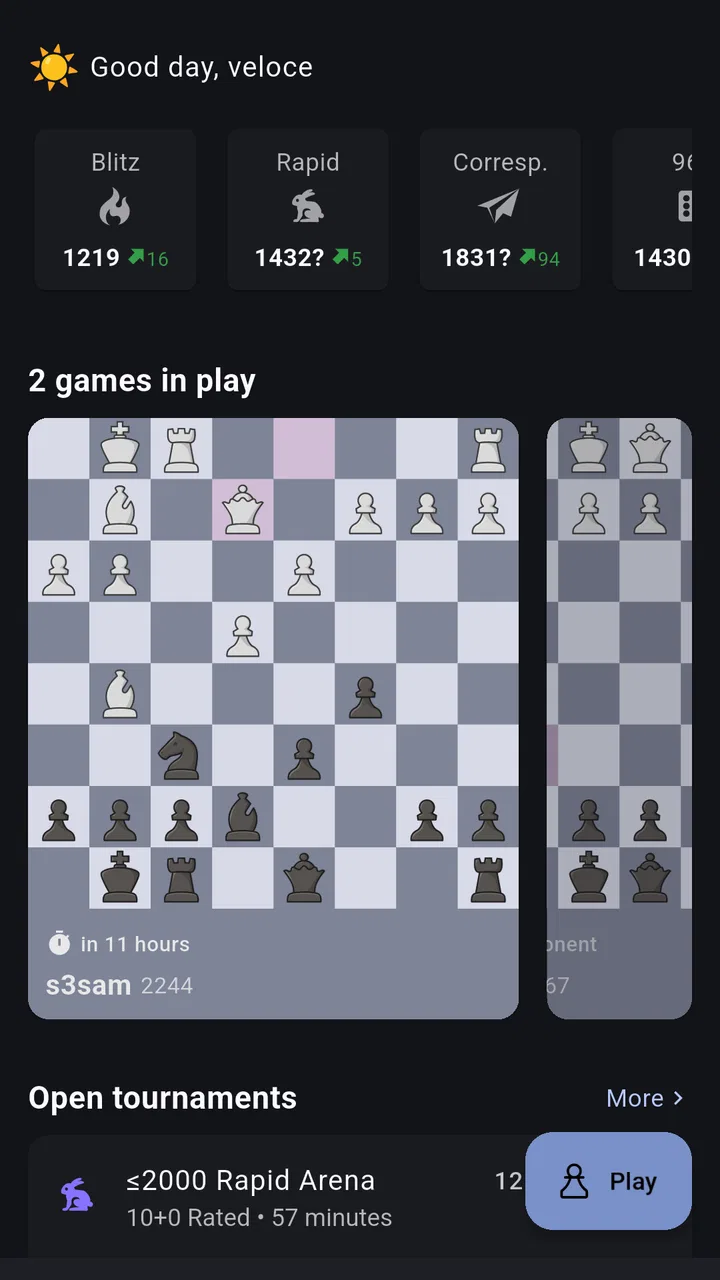
The first thing I notice when using Lichess is its restraint. The developer, lichess.org, presents the game as an open-source chess experience, and that identity affects the whole product. I am not pushed toward a premium tier before I can enjoy a match. I can approach it as a quick pastime, a way to test an opening, or a more serious place to build a regular playing habit.
You May Also Like

 Blood Strike: 2.5 Anniversary
Blood Strike’s Loadouts Turn Every Drop Into a Tactical Gamble
A close look at Blood Strike’s custom loadouts: how fast access to signature weapons reshapes its battle royale rhythm, rewards preparation, and narrows the gap between fights.

 Pandora - Music & Podcasts
Pandora’s Music Is Easy to Start, but Harder to Recover
Pandora’s strength is its low-effort path from a seed to a station. Its weak spot is how much confidence it asks you to place in connection, setup, and quiet recovery.

 8 Ball Pool
 Is Built on Rivalries, Rematches, and Routine
A close look at the rivalries, rematches, shared routines, and unanswered safety questions that turn a quick pool match into a persistent mobile community.

 Samsung Music
’s Quiet Strength Is Playing What You Already Own
Its reach comes less from spectacle than from dependable access to a personal library. That simplicity is both the app’s strongest retention engine and its ceiling.

 AccuWeather: Weather Radar
AccuWeather Review: A Quick, Clear Forecast for Everyday Decisions
For everyday plans, the best forecast is the one you can understand quickly. AccuWeather makes rain timing, radar, and local conditions easy to act on, with a few trade-offs.

 Hill Climb Racing
Why Hill Climb Racing Still Turns Crashes Into One More Run
A tiny car, a bumpy hill and one more upgrade: Hill Climb Racing keeps resurfacing because its simple chaos makes every near-miss feel personal.
More From Our News Desk
View All News


That flexibility makes it useful in ordinary situations. If I have ten minutes before an appointment, I can use that time for a short game or a little practice instead of committing to a long session. At home, I can also treat it as a study companion: play a position, pause to think, and review the decisions that led to a mistake. The same app works for casual and ambitious players, although each group will notice different strengths and frustrations.
For a beginner, the board is immediately recognizable and the basic purpose is clear: make moves, learn from them, and gradually improve. The challenge is that chess itself has a steep learning curve. Lichess does not remove that difficulty, and its focused presentation may feel austere to someone expecting a guided course with constant explanations. I would recommend it to a new player who is willing to explore, but not to someone who wants every move turned into a lesson automatically.
Experienced players are more likely to appreciate the lack of clutter. A serious game benefits from not being interrupted by unrelated rewards or sales prompts. I also like that the app can serve different moods: a fast tactical test when I am alert, a slower game when I want to calculate carefully, or a quiet review session after losing. That range is more valuable than it sounds because it lets one chess app remain useful as my available time changes.
Free access changes the way I use it
The price is one of Lichess’s clearest advantages: it is free. That matters not only financially but also psychologically. I can recommend it to a friend without first asking whether they are comfortable with subscriptions or one-time purchases. A parent can let a child try chess without turning the first experiment into a shopping decision, and a casual player can return after a long break without feeling that an unused membership is waiting in the background.
There is also a practical trade-off. Commercial chess apps often put more effort into onboarding, visual feedback, and carefully packaged lessons because those elements help them sell a polished experience. Lichess feels more like a complete chess environment than a guided entertainment product. I prefer that when I already know what I want to do. If I need a patient tutor to explain every concept from the beginning, another app may be easier during the first few weeks.
The Everyone content rating makes the app approachable for a broad audience, but that should not be confused with simplicity. Chess is suitable for all ages while still demanding concentration, patience, and a willingness to lose often. In my experience, the best way to introduce it to a child or complete beginner is to sit beside them for the first sessions, explain the purpose of the controls, and help them turn confusing games into small learning goals.
Small workflows that make it more useful
One useful habit is to separate playing from reviewing. After a disappointing game, I do not immediately start another one just to erase the feeling of losing. I first replay the critical moments and ask a narrower question: where did my plan stop making sense? That workflow turns the app from a string of matches into a record of decisions. It is especially helpful for players who tend to remember the final blunder but forget the earlier move that created the problem.
A second tip is to choose the session length before opening the board. When I only have a short break, I avoid starting something that requires a large uninterrupted block of attention. When I have more time, I can think through a position instead of moving impulsively. This sounds obvious, but mobile chess encourages hurried play because the phone is always close at hand. Treating the app as a deliberate activity rather than a reflex makes the games more rewarding.
A third, less obvious use is as a conversation tool. I can play a friend remotely, then use the game as a shared object for discussing ideas afterward. That is often more engaging than sending a generic puzzle because both players remember the decisions and emotions behind the position. For a small chess group, the app can become a practical meeting point even when everyone is in a different place.
I also find value in using it after studying away from the phone. If I read about a familiar opening or endgame idea, I can test whether I actually understand it by trying to apply the concept in a real position. The important part is not pretending that one successful move proves mastery. The app is better used as a feedback loop: learn one idea, try it, notice where it fails, and return to the explanation with a more specific question.
What the recent version means for existing players
Version 0.21.9 is the current release, while the app itself was released on May 16, 2024. Those details place the product in a relatively recent stage of its mobile life, but they do not by themselves promise a particular feature or performance improvement. I would therefore judge this release by the everyday experience it offers now, not by assumptions about what a version number should mean.
For someone already using Lichess, the main benefit of staying with the current version is continuity with the app’s present direction. The core identity remains clear: open-source chess, free access, and a board-first experience. Existing users who value that approach are unlikely to feel that the product has abandoned its purpose in favor of a more commercial design.
At the same time, updating is not a substitute for fixing every source of friction. A current version can still feel less smooth than a polished rival on a particular phone, and a player may still prefer another app’s lessons, presentation, or beginner guidance. I would not update expecting a completely different product. I would update because the current release is the version intended for today’s Android environment and because staying current is the sensible way to evaluate the app as it now exists.
New users should also understand that the mobile version is not necessarily the whole Lichess experience in their minds. The name carries expectations among chess players who may already know the broader ecosystem, but a person discovering it through a phone should focus on the actual tasks they want to perform. Can they comfortably play? Can they understand the available paths for practice and review? Does the interface make them want to return? Those questions matter more than reputation alone.
Where the app still creates friction
The biggest limitation for me is presentation. Lichess’s serious, open-source character is admirable, but it can make the app feel utilitarian. Players who are used to bright animations, elaborate progress tracks, and highly scripted lessons may interpret that restraint as a lack of polish. I do not think that makes the app bad, but it does mean the first impression may be colder than the chess quality deserves.
Navigation can also require patience. Chess players often want several different things from the same product: a quick game, a structured lesson, a position to analyze, and a way to understand a mistake. When those activities are not presented as one obvious learning path, beginners may wonder what to do next. I would be comfortable recommending the app to a curious learner, but I would tell them to explore one area at a time instead of expecting a guided tour.
Another trade-off is motivation. Some people enjoy improving because the board itself is enough motivation. Others need visible milestones, frequent encouragement, or a strong sense of progression. Lichess is better suited to the first group. If I lose several games in a row, the app does not magically solve the emotional problem of chess: I still need to step back, identify a manageable lesson, and return with a plan. That can be healthy, but it is not always entertaining.
Phone screens introduce their own problems. A chessboard that feels comfortable on a tablet or desktop may feel cramped on a smaller handset, especially when I am trying to inspect a position carefully. Touch controls are convenient, yet they also make accidental moves or hurried taps more likely. I would not choose a small-screen phone as my main serious study setup, even though it is perfectly useful for casual play and short reviews.
Players who need a completely offline chess companion should think carefully before making Lichess their only option. The strongest reason to use it is its connected chess environment and the opportunities that come from playing and learning around other people. Someone who mainly wants a private board for offline games, with no interest in a broader online experience, may find a simpler chess utility more suitable.
How it compares with familiar alternatives
Against mainstream chess apps, Lichess stands out through its open-source identity and free access. Many alternatives feel more like training products: they package lessons, puzzles, progress systems, and visual rewards into a carefully managed route. That can be excellent for a beginner who wants direction. Lichess is the better fit when I want fewer commercial pressures and more freedom to decide whether the next session is a game, a review, or an experiment.
Against a physical chessboard, the phone is obviously more convenient for finding an opponent and carrying a game anywhere. A real board still wins for relaxed face-to-face play, especially when teaching a child or talking through a position with a friend at the same table. I see Lichess as complementary rather than a replacement for that experience. The app gives me access and repetition; the physical board gives the game a social presence that a screen cannot fully reproduce.
Against a desktop browser, the mobile app wins on immediacy. I can use it during a commute, in a waiting room, or from the sofa without opening a larger device. The desktop setting remains preferable when I want a wider view and a more deliberate study session. My practical recommendation is to use the phone for maintaining momentum and the larger screen for analysis that deserves concentration.
The rating of 3.1 from roughly 8.4 thousand ratings should make a potential user realistic about the experience. It does not erase the app’s strengths, but it is a useful warning that the product will not satisfy everyone. The broad install base, now above one million, shows that the concept has reached many players, while the middling average suggests that interface expectations and personal preferences matter a great deal.
Who should choose it, and who should skip it
I would choose Lichess if I wanted a free chess app with a clear chess-first purpose, if I disliked aggressive monetization, or if I already understood enough about chess to explore without constant hand-holding. It is also a strong recommendation for a player who wants to build a repeatable routine: short games on busy days, longer thinking sessions when possible, and review afterward instead of treating every result as a verdict on ability.
I would be more cautious recommending it to someone who has never played chess and wants a fully guided course from the first tap. That person may have a better first month with an alternative that explains the pieces, gives frequent feedback, and organizes progress into small lessons. I would also suggest looking elsewhere if visual polish, animated rewards, or a highly curated training path is the main reason for choosing an app.
For families, the Everyone rating is reassuring, but supervision and shared play still matter more than the label. A child may enjoy moving pieces without understanding why a game ended or why a move was dangerous. Sitting together for a few games, setting a simple goal such as protecting the king, and discussing one position afterward can make the experience much more inviting than handing over the phone alone.
What I would watch as the product evolves
The most important thing to watch is whether future mobile development improves clarity without weakening the app’s distinctive character. I would welcome smoother navigation, a more welcoming first session, and clearer routes from playing to learning. Those changes would help beginners while preserving the open-source, no-cost identity that attracts experienced users.
I would also pay attention to how well the current version continues to serve different screen sizes and different styles of play. A chess app needs precision more than spectacle. Better touch feedback, comfortable board presentation, and dependable movement between a game and its review would matter more to me than decorative additions.
There is a delicate balance here. If Lichess becomes too simplified, it could lose the sense of freedom that makes it appealing. If it remains too austere, new players may leave before discovering its depth. The strongest evolution would explain the possibilities more clearly while allowing advanced users to ignore the guidance once they know their own routine.
My final recommendation is positive, with a clear condition: choose Lichess for its chess values, not because you expect a glossy entertainment package. I like that it gives me a serious, free place to play and think, and I appreciate that the developer’s open-source approach is visible in the product’s character. The 0.21.9 release is worth trying for Android users on version 8.0 or later, particularly players who want control over their sessions rather than a heavily scripted path.
Lichess is at its best when I use it as a long-term chess workspace: play a game, notice a recurring weakness, investigate it, and return with one practical idea to test. It is less convincing as a hand-held tutor for someone who wants every step explained. If that distinction matches what you want, the app is easy to recommend. If not, a more guided alternative may be the kinder choice for your first games.
FAQs for Lichess
01What platforms is Lichess available on?
Lichess is available on both Android and iOS platforms, allowing chess enthusiasts to play on their smartphones and tablets. In addition to mobile devices, users can access Lichess on desktop through its web version, which offers the same robust features and seamless gameplay experience.
02Is Lichess free to use?
Yes, Lichess is completely free to use. Unlike many other chess apps, it does not contain ads or in-app purchases. The platform is open-source and community-driven, ensuring that all features, including puzzles, tournaments, and analysis tools, are accessible to every user without any cost.
03What features does Lichess offer for beginners?
Lichess offers a comprehensive set of features for beginners, including interactive tutorials, practice puzzles, and a variety of difficulty levels in AI matches. It also provides detailed analysis of games, helping new players understand their mistakes and improve their chess skills progressively.
04Can I play Lichess offline?
Yes, Lichess offers an offline mode where users can play against the computer without an internet connection. However, features like multiplayer matches, online tournaments, and real-time analysis are only available when connected to the internet.
05How does Lichess ensure a fair play environment?
Lichess employs various anti-cheating measures to maintain a fair play environment. This includes automatic detection of suspicious behavior, manual reviews by moderators, and a robust reporting system. These measures help ensure that all games are competitive and enjoyable for players of all skill levels.
Pros
- Free access to all features and games.
- No ads
- ensuring a distraction-free experience.
- Available on multiple platforms for flexibility.
- Wide variety of game modes and puzzles.
- Open-source
- encouraging community involvement.
Cons
- Requires internet connection for online play.
- Limited offline features and content.
- Interface can be overwhelming for beginners.
- Notifications can be inconsistent at times.
- No built-in coaching or tutorials for beginners.

Lichess
Gallery